
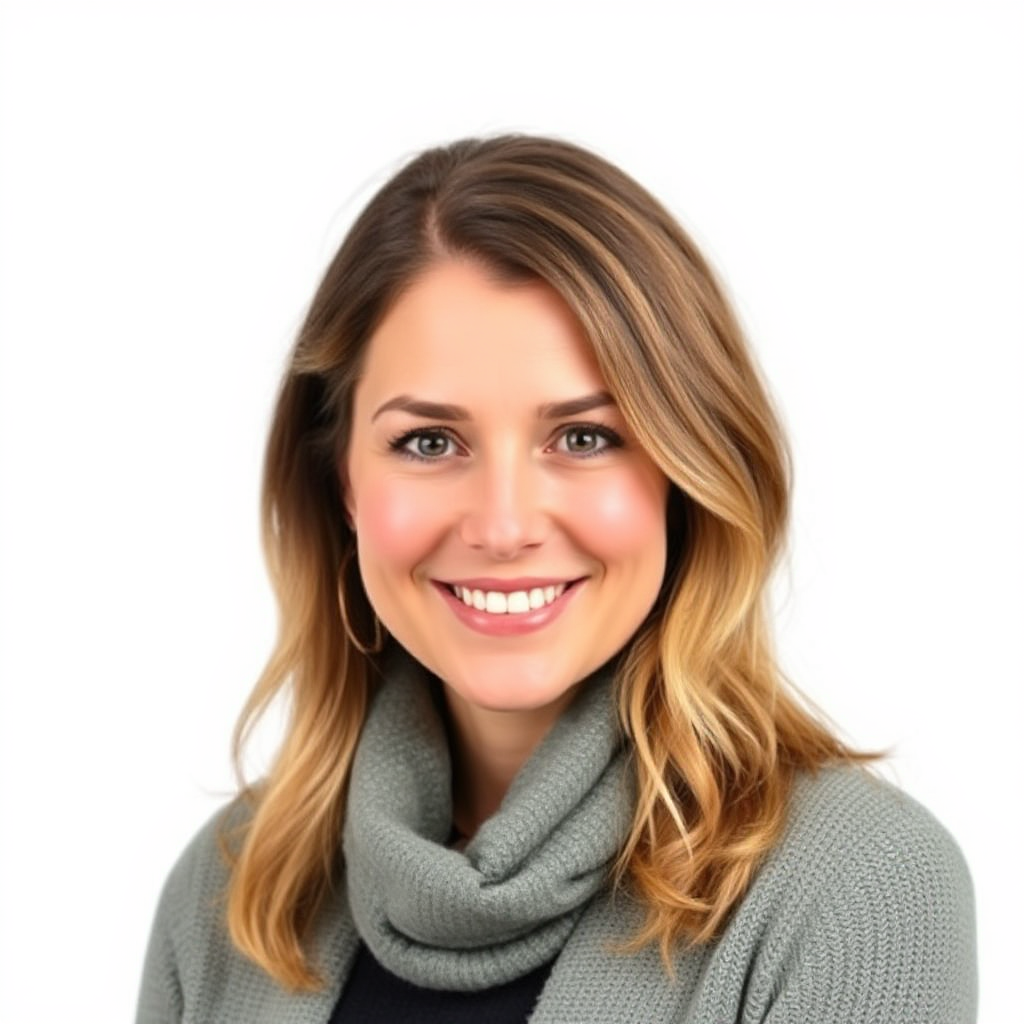
The deceased US vice-president Dick Cheney, who passed away at the age of 84, was considered among the most powerful holders of that position in American history. Whereas countless vice-presidents were limited to minor or symbolic positions, Cheney wielded huge power during the administration of George W Bush, to the point that he was often referred to as the "true president".
Bush disliked such a characterisation and claimed the connection was more complicated. He noted that Cheney was deferential, invariably calling him in public as Mr President, while he addressed him as Dick. Bush questioned even portrayals of their partnership as a collaboration because it suggested that they were on equal footing. In spite of these objections, Cheney viewed the easygoing president accommodating on a whole raft of governmental choices.
A Period Following the Attacks
In charge of a contingent of neo-conservatives that encompassed military head Donald Rumsfeld and assistant defense secretary Paul Wolfowitz, he strongly advocated the armed incursion of Iraq in 2003 in answer to the terrorist strikes on New York and Washington. During of the 9/11 attack, Bush had been attending a session at a elementary school in Florida. As Bush headed for a secure location in Nebraska, Cheney took command, directing the downing of any non-communicating aircraft nearing the government building.
Cheney said the attacks changed him, causing him to be intent on revenge. In conjunction with other neo-cons, like Rumsfeld and Wolfowitz, he campaigned for a invasion of Afghanistan in an effort to seize Osama bin Laden. Cheney then pressed fiercely for the invasion of Iraq, though there was no evidence of Saddam Hussein being involved.
Disputed Actions
He voiced no apologies about the invasion, in which an reckoned 100,000 Iraqis died, and not about the harsh treatment of suspects apprehended after 9/11. He informed CNN in 2015 that the Iraq invasion, which was based on faulty information repeated by Cheney, was the proper path to take. "It represented the correct action to do at that time. I was convinced then and I maintain that stance today."
However even at the time, there were contrary opinions at a top tier about the mishandling of Iraq. One of the government's own delegates to the region, General Anthony Zinni (2001-03), was not retained from the role. "I observed, as a baseline," he subsequently stated "obvious failure, negligence, and recklessness: in the worst case, falsehoods, incompetence, and dishonesty."
Broader Context
Cheney was not completely accountable for the Iraq invasion. Before 9/11, Wolfowitz had pushed for comparable steps. He had written a memorandum setting out situations in which US concerns might be endangered (including "access to crucial commodities, primarily Persian Gulf oil"). Wolfowitz had asserted that "America should be positioned to operate alone when collective action cannot be arranged," particularly mentioning armed actions against Iraq.
Bush additionally had arrived in the White House generally inclined on executing what his predecessor had notably declined to do in 1991; topple Saddam. Subsequent to he had been fired by the president, the treasury secretary Paul O'Neill disclosed how, at the initial gathering of the National Security Council in January 2001, Bush had announced his intention of diminishing America's involvement in the Middle East dispute and suggested military action against Iraq.
Bush held a personal grudge against Saddam, thinking he had been behind a plot to kill his father, President George HW Bush, on a visit to Kuwait in 1993. He additionally disliked that one of the biggest establishments in Baghdad had a floor mural with a image of his parent's face that all visitors had to walk over.
Interrogation Methods
But it was Cheney who was part of the most vociferous advocating attacking Iraq, repeatedly quoting intelligence reports that were either weak or totally misleading. He supported what the Bush government politely called as "enhanced interrogation", the application of waterboarding and harsh treatment.
Addressing a Senate analysis in 2014 that determined that no valuable data had come from the torture, Cheney disregarded the report as "loaded with crap". He informed Fox News: "We instructed [the CIA] to take steps and create procedures to capture the individuals who killed 3,000 of us on 9/11 and ensure it never happened again. That's exactly what they did and they merit a lot of recognition."
Public Image
Cheney took pleasure in nicknames imposed on him by opponents such as Darth Vader and the dark figure, and by the notion that he was a shadow power controlling Bush. In the author's 2013 book about the two, Days of Fire: Bush and Cheney in the White House, Cheney is cited as commenting: "Do I represent the sinister strategist in the shadows that remains unseen come out of his lair? That is a nice way to work, truthfully."
Business Interests
Controversy over his business interests accompanied him throughout his time as VP. Even though he had minimal expertise in commerce but good contacts in defence, especially in Saudi Arabia, he was offered a position at Halliburton, one of the world's most substantial oil and gas corporations, in 1995 as chair and chief executive.
In 2000 he was selected as Bush's running mate for the White House. Contentiously, during the conflict in Iraq, Halliburton was awarded US agreements valued at billions.
It greatly increased his wealth. His annual income during his tenure at the company rose from his quarter-million dollars when he was Pentagon chief to over four million. When he left in 2000 he had a severance arrangement worth in excess of $20m|twenty

